In short: If your AI keeps getting your own business wrong, the fix is almost never a better model - it is one system of record, written definitions, and scoped access.
You ask your new AI assistant a simple question: how many active customers do we have?
It answers in a second, with a number and a tidy explanation of where the number came from. It sounds right. It is not right. Your CRM says one thing, your billing system says another, and the spreadsheet the sales team actually maintains says a third. Nobody at the company has ever written down what “active” means.
The model did not fail. It did exactly what it was asked, across data that disagreed with itself, and returned the most confident reconciliation it could assemble. That gap between what your records say and what your team knows is what AI-ready data is really about.
Why does AI give wrong answers about your own business?
Because your records were built for humans who already knew the context. Your team knows the regional spreadsheet is stale, that two entries are the same company, and that “active” excludes trial accounts. None of that is written anywhere. An AI reads what is written, and when the written record contradicts itself you get a fluent, wrong answer.
Almost every stalled deployment we are called into arrives described as a model problem. Most turn out to be a problem of definitions, ownership, and access that the business never had to solve while humans were the only readers. That is what AI-ready data actually means, and it is far less exotic than it sounds.

1. Two systems, two truths
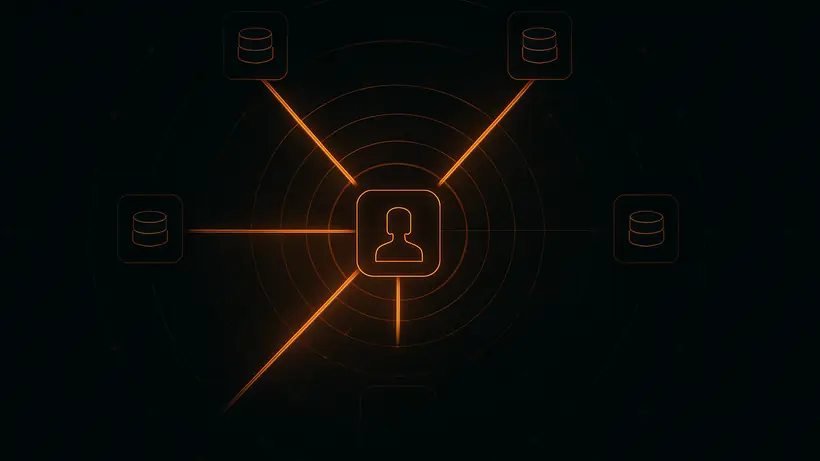
Most small and mid-sized companies run three to six tools that each hold a partial copy of the same customer. A CRM, an invoicing tool, a support inbox, a scheduling app, and at least one spreadsheet that exists because one of those tools could not do something. Every copy started drifting the moment it was created.
What it looks like in production
- The same company appears as “Northline Logistics”, “Northline Logistics LLC” and “northline” - three separate customers as far as the agent is concerned
- A cancelation is recorded in billing but never in the CRM, so the agent keeps sending renewal emails to a customer who left in March
- Two systems both hold a phone number, the numbers differ, and nothing marks which one wins
- A record last touched by an integration in 2024 is indistinguishable from one a person verified yesterday
The fix
Pick one system of record per entity before you build anything: one authoritative place for customers, one for invoices, one for tickets. Everything else becomes a read-only mirror. This is unglamorous work, and it is usually a week rather than a quarter, because you are not merging every system. You are declaring which one wins when they disagree.
2. Your most valuable knowledge was never written down
The knowledge that makes your business work is mostly undocumented. Which suppliers slip in December. Which customers have the 45-day terms. What “priority” really means when the phone rings at 4pm on a Friday. It lives with the three people who have been there long enough to know.
What it looks like in production
- Pricing exceptions agreed over email and never recorded anywhere a system can read
- A procedures document that has not been opened since the year it was written
- Escalation rules that exist only as one manager’s judgment
- Scanned contracts holding the actual terms, invisible to search
The fix
Do not try to document the whole business. Document the one process you are automating, to the level of detail you would need to hand it to a new hire on their first morning, and no further. If a rule cannot survive being written down, it is not a rule. It is a judgment call, and it belongs behind a human approval gate. That distinction is most of the design work.
3. Nobody agreed on what the words mean
Ask four departments what an “open ticket” is and you will get four answers, all of them reasonable. People reconcile this silently in meetings. Software cannot. An agent asked to act on “open tickets” will pick one definition and apply it consistently, which is exactly when someone notices the definitions were never the same.
What it looks like in production
- “Active customer” means billing status to finance and last contact date to sales
- Churn counts differently depending on whether a pause is treated as a cancelation
- Revenue is booked on invoice date in one report and payment date in another
- “Complete” means the work is done in operations and the money is in for accounts
The fix
Write a one-page definitions sheet for the ten to fifteen terms your automation will touch. Get the department heads to agree to it in one meeting. Then put those definitions where the system reads them, not only where people read them. A definition that lives in a shared document and not in the query is a definition that will drift again by spring.
4. Your permissions assumed a reader who would not bother
Access control in most companies runs on friction. A folder that everyone can technically open but nobody goes looking through is not access control, it is obscurity. It works because humans are busy and incurious about the finance folder. An agent is neither. It reads everything within reach, in seconds, and may quote it back to whoever asked.
What it looks like in production
- A salary spreadsheet sitting in a drive shared with the whole team
- A support tool summarizing a thread and surfacing details from another customer’s account
- Superseded contracts retrieved and presented as current pricing
- Half-finished drafts and personal notes treated as authoritative sources
The fix
Scope the agent to the smallest set of sources the task genuinely needs, granted per source rather than per drive, and exclude anything sensitive explicitly rather than by assuming nobody will ask. Treat this as a security control, not a tidiness exercise: over-broad access is one of the main ways agents get exploited in production.
5. It was clean on launch day
Data readiness is not a project you finish. Someone adds a field. A supplier changes an export format. A new product line appears that the mapping never anticipated. Staff invent a workaround status because the official one does not fit what they actually do. Ninety days later the accuracy has quietly degraded and nobody owns it. The same decay decides whether AI shopping agents can see your catalog, which we cover in our guide to agentic commerce.
What it looks like in production
- A new required field in the CRM that the agent’s mapping silently ignores
- A changed invoice layout that causes extraction to drop line items without erroring
- A status value staff invented, which the workflow treats as unrecognized and skips
- The one person who understood the mapping leaving the company
The fix
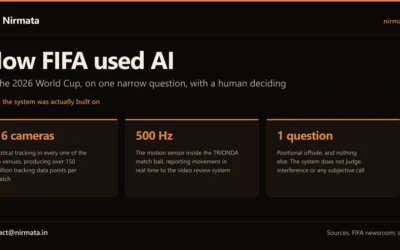
Name an owner and set a monthly accuracy check before go-live, not after the first bad week. Pick the number you will watch and alert on it. In our own deployments we watch error rate before throughput, because throughput looks healthy right up to the moment it is confidently wrong. For a large-scale version of the same principle, see how FIFA instrumented the pitch before automating any decision.
The gap between confidence and readiness
In Cloudera’s Data Readiness Index (1,270 IT leaders at companies with more than 1,000 employees across the Americas, EMEA and APAC, fieldwork 22 January to 3 March 2026, conducted by Researchscape and commissioned by Cloudera), 84% said they were confident in their data’s accuracy and completeness, while only 18% said their data was fully governed and close to 80% said data access problems were holding AI back. This is vendor-commissioned research on large enterprises, not small businesses, so treat the exact figures with care. The pattern is the point, and it matches what we find on site: confidence is high, readiness is not.
Myth vs Facts
Myth: “95% of AI projects fail, so the odds are against us anyway.”
Fact: That statistic travels far beyond what its source supports. It comes from a preliminary version 0.1 findings deck built on 52 interviews plus 153 surveyed leaders, and it reports that 95% of organizations saw no measurable return, which is not the same claim as 95% of pilots failing. If you want a scoped anchor, use Gartner’s February 2025 prediction that through 2026 organizations will abandon 60% of AI projects unsupported by AI-ready data. Still a forecast, but a clearly defined one.
Myth: “We have to clean all our data before we can start.”
Fact: A full data cleanup is a multi-year program, and treating it as a prerequisite is how AI projects die before they begin. Clean the slice that one process touches. A single well-scoped workflow running on trustworthy data beats a company-wide cleanup that never finishes.
Myth: “A stronger model will handle the mess.”
Fact: A stronger model reconciles contradictions more persuasively, not more correctly. It has no way to know which of your two customer records is the real one, or that the regional spreadsheet stopped being updated in 2024. Capability does not substitute for ground truth.
Myth: “Retrieval solves this - it just reads our documents.”
Fact: Retrieval over a contradictory document set returns the contradictions faster. It will surface a 2023 price list with the same confidence as the current one unless something tells it which is authoritative. Retrieval is a delivery mechanism, not a source of truth.
AI-ready data: symptom, cause, first move
| What you notice | What is actually wrong | First move |
|---|---|---|
| It keeps getting basic numbers wrong | No single system of record | Declare one authoritative source per entity |
| Great in the demo, poor on real cases | Edge-case rules were never documented | Write the process to new-hire level, gate the rest |
| Two departments dispute its output | Key terms are undefined | One-page definitions sheet, agreed by both |
| It surfaced something it should not have | Permissions relied on obscurity | Per-source access, least privilege, explicit exclusions |
| It worked for two months, then drifted | No owner and no monitoring | Named owner, monthly accuracy check, alerting |
What this means if you’re running AI in your business
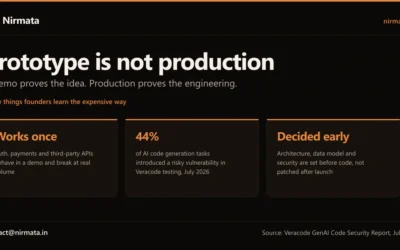
The uncomfortable part is that none of this is AI work. It is the operational hygiene most businesses defer because humans compensate for it every day without being asked. AI removes that compensation layer, and everything the team was quietly absorbing becomes visible in a single wrong answer. The same is true of custom software, where identity, data and payment decisions made before the build are what separate a prototype from a production system.
The upside is that this work is finite and cheap compared to the build. In the D2C operation behind our 68% cost reduction case study, around 70% of the operations budget sat in predictable, rule-following work, and error rate fell from roughly 4% under human supervision to under 1.5% by day 60. That second number is only achievable when the underlying records agree with each other. It is also why a pilot can look successful and still never show up in your costs: the demo ran on the clean tenth of your data.
- One named system of record for every entity the automation touches
- A written definition for each term the workflow depends on, agreed across departments
- The target process documented to the level you would hand a new hire
- Access granted per source, least privilege, with sensitive material explicitly excluded
- A named owner and a monthly accuracy check scheduled from day one
- One agreed number that says whether it is working, measured before you start
Which data risks are you carrying?
Tick each that applies to your business.
- Two systems hold the same customer and nothing says which one wins
- Your team could not agree on a definition of “active customer” in one meeting
- Key operational rules live in one person’s head
- A shared drive holds sensitive files that are technically visible to everyone
- Nobody owns data accuracy after a system goes live
If This Were Your Deployment, Here’s Our First Move
We would not start by choosing a model. We would spend the first week on the process itself: map every source it reads, name the system of record, write the definitions down, and cut access back to the minimum. Only then would we build. That order is what keeps a project from stalling three months in with a system nobody trusts.
If items on the checklist above are unticked, that is the work to do first, whether you do it with us or on your own. If you want an outside read on where your data actually stands, tell us about the process you want to automate and we will tell you honestly what shape it is in before anyone writes code.